Understanding Credit Scores in Canada
Last updated:
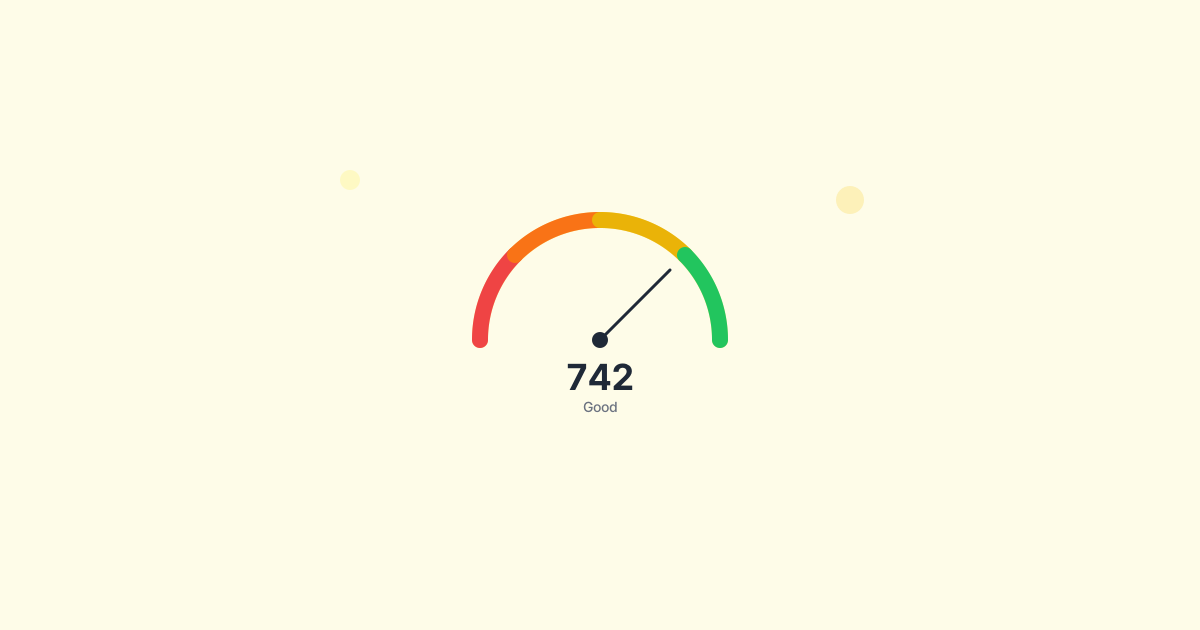
Your credit score is a three-digit number between 300 and 900 that represents your creditworthiness to lenders. In Canada, it plays a crucial role in your ability to get approved for credit cards, mortgages, car loans, and even rental applications. Here's everything you need to know.
Looking for a specific card?
Use our finder tool to compare cards based on your preferences.
How Credit Scores Work in Canada
Canada has two main credit bureaus: Equifax and TransUnion. Each calculates your credit score differently, so you may have slightly different scores from each bureau. Most lenders in Canada use scores ranging from 300 (poor) to 900 (excellent).
Your score is based on information in your credit report, which includes your payment history, credit accounts, inquiries, and public records like bankruptcies.
What Factors Affect Your Score
Five main factors influence your Canadian credit score:
1. Payment history (35%): Whether you pay bills on time. Even one late payment can drop your score significantly. 2. Credit utilization (30%): How much of your available credit you're using. Keep this below 30%. 3. Credit history length (15%): How long your accounts have been open. Longer is better. 4. Credit mix (10%): Having different types of credit (credit cards, loans, mortgage) helps. 5. New credit inquiries (10%): Each hard inquiry can temporarily lower your score by a few points.
Credit Score Ranges in Canada
- 800-900 (Excellent): Best rates and approval odds for any credit product - 750-799 (Very Good): Qualifies for most premium credit cards and best loan rates - 670-749 (Good): Qualifies for most credit products at competitive rates - 580-669 (Fair): May qualify for basic credit products, potentially at higher rates - 300-579 (Poor): Limited options; may need secured products to rebuild
How to Check Your Credit Score for Free
Several free services let you check your credit score in Canada without affecting it:
- Borrowell: Free Equifax score, updated weekly - Credit Karma: Free TransUnion score - Your bank: Many Canadian banks now show your credit score in online banking
Checking your own score is a "soft inquiry" and doesn't affect your score. Only applications for credit (hard inquiries) can lower it.
How to Improve Your Credit Score
1. Pay bills on time, every time. Set up autopay for at least the minimum payment. 2. Keep credit utilization low. Try to use less than 30% of your available credit. 3. Don't close old accounts. They help your average account age. 4. Limit applications. Only apply for credit when you genuinely need it. 5. Check for errors. Review your credit report annually for mistakes and dispute any inaccuracies. 6. Use a credit card regularly. Small, regular purchases paid in full each month build a strong payment history.
Related Cards
BMO CashBack Mastercard
MastercardBMO · No annual fee
Pros
- +No annual fee
- +Excellent 3% rate on groceries
- +Good for building credit
Cons
- –Only 0.5% on general purchases
- –No travel benefits
Neo Financial Mastercard
MastercardNeo Financial · No annual fee
Pros
- +No annual fee
- +High cashback at partner stores
- +Guaranteed approval (secured option)
Cons
- –Low earn rate outside partner network
- –Partner network still growing
BMO SPC CashBack Mastercard
MastercardBMO · No annual fee
Pros
- +No annual fee
- +Free SPC student discount membership
- +3% cashback on groceries
Cons
- –Low base earn rate
- –Limited perks beyond SPC
Related Guides
This is educational content, not financial advice. Always confirm details with the card issuer before applying.